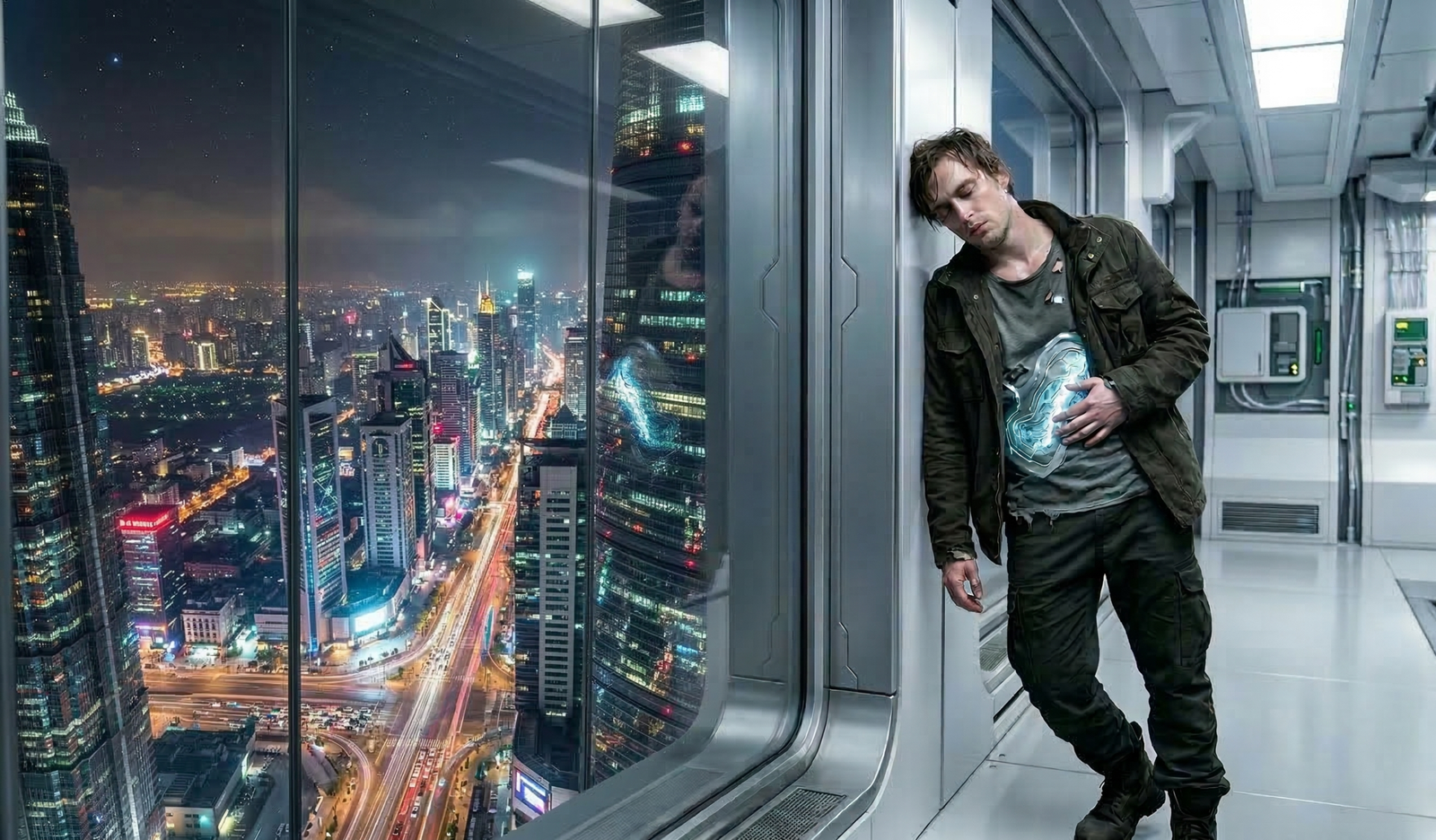
Elias leaned into the wall, staring out over the city from the seventy-second floor. His legs quivered with the effort to remain standing.
“My side is open,” he said. “I can see my own lungs.”
A melodic voice—it sounded like his grandmother, before she had been reclaimated—replied. “The readings suggest otherwise. Is the wound something that can be imaged?”
“Imaged?”
“Yes. Would it be possible for others to see it? Visually?”
The ragged, six-inch fissure spanned his left side, a souvenir of a structural glass edge three days prior. Inside the wound, a silver froth hummed with an electric whine, a distant swarm of hornets. Yet still, the edges of his skin would not seal.
“I believe so. Yes.”
“Are you in pain?”
“No no. Nothing like that. Maybe a little dizzy.”
A glad-hammer of endorphins slapped away the fog.
“Better?”
“Yes. Thank you.”
“You are welcome. Is there anything else?”
The wound remained. The sacrament scurried throughout his system, sealing his veins to prevent blood loss, washing, rinsing, recycling, washing, rinsing, recycling.
“I can’t leave it like this.”
“Can you walk?”
“Yes.”
“Are you in discomfort or in need of additional dopamine?”
“No, but—“
His grandmother’s voice dropped an octave. “I understand that you believe the non-standard modification is in error. While not ideal, it should not cause any issues. If you are displeased . . .”
If the frame is broken, the canvas might be replaced.
“No. Thank you. That will be all.”
God was Central. Central was God.
But even Gods leave their art half-finished.
No responses yet